Functional hepatic tissue.
Metabolism and toxicity modelled in human tissue, paired to the same donor as the neural line.
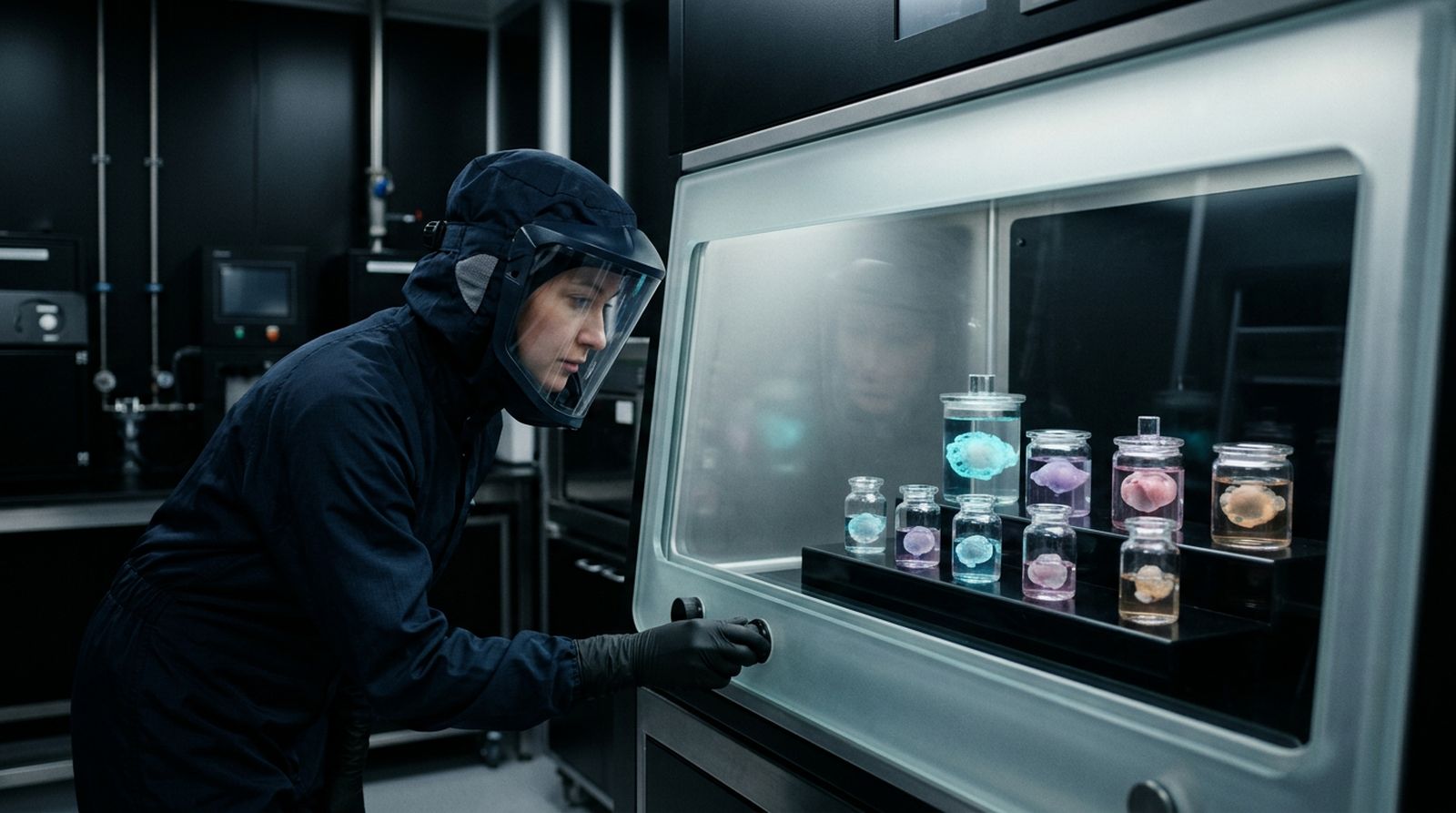
The same donor. A second organ.
Why the liver
It is where most compounds are metabolised and where much drug toxicity appears. A hepatic model that behaves like human tissue changes what can be learned before anything reaches a patient.
Metabolism and toxicity
Hepatic organoids give a route to studying compound handling and toxic response in human cells rather than inferring it from another species.
The paired-tissue advantage
When a liver organoid and a brain organoid come from the same donor and the same characterised line, the metabolic and the neural picture belong to one genome. Few platforms are built to do this.
Toward cell therapy
Functional hepatic tissue for transplantation is a serious long-horizon goal in the field. We name it as a direction, not as something available.
Hepatic organoid generation from iPSC lines.
Patient-matched pairing with neural tissue, and assay standardisation.
Functional hepatic tissue for cell therapy.